Key Fintech Trends 2026 | Software Development Innovations

Bhavin Umaraniya
Finance
Published : Dec 5, 2025
The FinTech Revolution Entering 2026
FinTech isn’t just disrupting finance anymore; it has become finance. As we enter 2026, fintech trends 2026 show that software innovation separates the winners from everyone else. The companies building the intelligent code are eating the market.
What Is FinTech in 2025?
Remember when a banking app on your phone felt futuristic? That was 2020.
Financial technology trends today reveal something far bigger. It’s the AI that approves your loan in 30 seconds. It’s the “buy now, pay later” button that appears exactly when you need it. It’s your freelance payment arriving instantly instead of waiting five business days.
Fintech software development in 2025 combines intelligent software, predictive data science, and interconnected digital platforms to reinvent banking, lending, payments, and insurance.
What changed? Everything now runs on automation, real-time analytics, and personalized experiences that actually feel personal. Hire fintech developers to build financial services that do not exclude but reach millions.
The simple apps of yesterday became the invisible infrastructure powering everything today.
Market Momentum – Growth and Adoption Outlook
Market Size & Growth:
Fortune Business Insights reports the fintech market at $340.10 billion in 2024, expanding to $1,126.64 billion by 2032 at a 16.2% CAGR.
AI Adoption Surge:
AI adoption among financial institutions climbed from 58% in 2022 to 75% by 2025, according to Aimagazine, with 76% of financial services companies having launched AI initiatives targeting both cost efficiency and revenue growth.
Mobile Banking Dominance:
Mobile banking adoption reached 72% among US adults in 2025, up from 65% in 2022 and 52% in 2019, while globally, 66% of the population now has access to mobile banking, says CoinLaw.
Digital Transaction Growth:
By 2025, digital payments are expected to comprise 66% of point-of-sale transactions in Europe, reflecting how software innovation directly drives customer engagement and revenue growth across developed markets, explains Electro IQ.
Why Software Innovation Defines FinTech Success in 2026
The competitive edge in 2026 isn’t about lower fees or flashier apps anymore. Fintech software development in 2025 is about code that thinks ahead.
Software innovation defines FinTech success in 2026 because intelligent code now decides how fast products launch, how securely money moves, how endless verification loops end, and how well platforms personalize every user interaction. These engineering choices determine who leads the market.
The Rise of Invisible FinTech Infrastructure
The best fintech of 2026 was already produced in 2025, but you can barely see it. Fintech trends of 2025 show that fragmented financial tools have merged into the background. They do their things while you buy, travel, or work. Once finance becomes invisible, everything just flows easily.
From Visible Apps to Backend Ecosystems
There was a time when you had to download separate apps for payments, investments, or borrowing. That’s all gone. Invisible fintech infrastructure works beneath your daily activities without any self-promotion.
Orchestration Platforms and Composable Banking
Any idea of LEGO blocks? Composable banking platforms enable financial institutions to swiftly integrate KYC, payments, fraud detection, and lending into a single fintech ecosystem. Banks now wait no longer than a few weeks to launch a new tool and adapt to emerging market dynamics instantly.
Why FinTech App Development Matters in 2026
Mobile apps are no longer fintech; they are a gateway to fintech. FinTech app development trends reveal how system collaboration, real-time data flows, and API integration tie the entire system together. Once created, banks can roll it out everywhere, defining the user journey of millions.
AI-Driven FinTech Development
AI’s no longer just an add-on—it’s what everything runs on. Each smart move your fintech takes spotting scams or signing off on loans—happens because AI in FinTech Software handles the challenging work behind the scenes.
How AI Is Transforming Core FinTech Functions
AIs tweak deals instantly based on how you spend cash. On top of that, Generative AI applications in fraud detection catch shady payments before anything’s transferred. Decisions on loans take moments, not weeks. Your credit rating shifts nonstop with your habits, unlike old-school FICO, which only checks once a year.
What This Means for FinTech Software Design
Dev work has shifted—writing code isn’t the primary focus now; it’s about teaching systems. Machine learning in fintech requires new infrastructure: live data flows, tracking multiple model versions, side-by-side testing, and clear reasoning behind decisions so users understand why decisions are made.
Takeaway: AI shifts fintech from problem-solving to staying ahead, enabling smart forecasts rather than just reacting.
What to Expect: Live customization, quick choices instead of delays, and it stops scams before they cause damage every day.
Tuvoc makes smart-growth financial tech using AI and embedded finance.
Embedded Finance Becomes Mainstream
Embedded finance software is blending into daily life. No more launching bank apps or payment tools or getting loan or coverage pop-ups right inside your usual tasks, whether you’re browsing, buying, or doing work.
How Embedded Finance Expands Beyond Banking
Retailers offer instant payment options at checkout without delays. Meanwhile, logistics apps hand cash to drivers right after drop-off. Instead of switching tabs, SaaS dashboards slip funds straight into your workflow. With embedded finance, money moves hide within everyday tools, unseen until you actually need them.
Software Architecture Challenges in Embedded Finance
Setting up an embedded fintech SasS platforms architecture isn’t easy; it involves juggling shared APIs that handle loads of external traffic and using control hubs to push payments through different services while keeping data walled off so one team’s leak won’t spill over. Mess up the design, and soon you will be tearing it all down when things grow.
Takeaway: Money stuff now runs quietly behind every online moment we live through each day.
What to Expect: Get quick access to cash, easy pay options, or coverage—right on time, right where you need it.
Tuvoc creates secure embedded finance systems that grow with demand and open finance.
Open Finance and API-First Ecosystems
Banks are cracking open their safes. Open finance software development in 2025 isn’t teamwork—it’s staying alive. Expose info via APIs; otherwise, see users jump to systems that already do.
The Shift from Open Banking to Open Finance
Accessing bank accounts kicked things off. Beyond that, Open banking trends bring together stocks, retirement funds, insurance plans, and digital currencies; everything is linked via common tech standards. When people can manage their own data freely, networks win hands down over standalone systems.
How API-First Design Speeds FinTech Innovation
Folks handling money apps use API links to code quickly. Good kits, updated tracking, and outside test zones will get live updates real soon. Check connections risk-free, undo changes on the fly, and let teammates try financial data orchestration; no crashing your main setup.
Takeaway: APIs shift finance away from closed systems toward linked setups where users have control.
What to Expect: Access to every money account via a single dashboard, while info moves smoothly between systems.
Tuvoc builds tools focused on APIs to accelerate new ideas; meanwhile, blockchain provides precise tracking.
Blockchain and DeFi—Rebuilding Trust Through Transparency
Decentralized finance software development isn’t just digital coin talk these days. They’re actual systems solving everyday issues—open records, immediate payouts—while reliability comes from software rather than banks making promises.
Why DeFi Is Maturing in 2025–26
Regulators quit battling and began building systems instead. Actual DeFi is used today to track goods through delivery chains, turning real estate into digital shares, and also moving money across borders without glitches. The use of blockchain in Banking is empowering the financial institutions to improve their transparency and efficiency to ensure that distributed networks get to align within clear rules and meet daily operational predicaments.
Smart Contracts and Tokenisation in FinTech Software
Implementing blockchain in fintech software involves integrating smart contract code with outdated accounting systems, linking digital tokens to standard payment channels, and matching ledger updates to banking statements. Tying together ancient and modern money networks gets complicated real quick.
Takeaway: The Euphoria of blockchain has translated into practical use. Blockchain is now effectively used to clean records and make instant payments.
What to Expect: Digitizing real-world assets enabled by autonomous agreements enables fast cross-border money transfers.
Tuvoc hooks blockchain into old systems without risks, then rolls out automated compliance right after.
RegTech and Auto-Compliance Frameworks
Back then, staying compliant meant hiring loads of reviewers. These days? Regtech automation fintech development uses rules implemented in self-running scripts. When regulations change, the entire system adjusts in no time without human intervention.
How Automation Is Changing Regulatory Compliance
Auto ID checks confirm who people are in moments. Meanwhile, fraud alerts pop up and the second odd behavior appears. Since rules never stop changing, staying compliant nonstop keeps audits stress-free. Fintech compliance automation tool comparisons run onboarding to follow-ups from start to finish, all without someone clicking or typing.
Integrating Compliance Into the Development Lifecycle
RegTech solutions build compliance right into the release process. With each update, you get logs showing who changed what, plus instant rule checking. Move quickly while staying on track—no more waiting for approvals. Rules fit naturally into coding tasks instead of feeling like an extra chore.
Takeaway: Following rules moves away from people checking stuff by hand toward systems that automatically enforce them through software.
What to Expect: Fast identity checks, live tracking, and instant rule adjustments when laws shift.
Tuvoc keeps things running smoothly while staying quick on its feet, not just fast but building to grow as needs change.
Cloud-Native Architectures for FinTech Scale
Old bank software struggles with today’s needs. Cloud-native fintech architecture in 2025 needs to scale easily, launch quickly, and let tools connect right away through open interfaces.
Why FinTech Platforms Are Going Cloud-Native
Faster changes beat slow fixes when things get busy. Grow big when customers pour in, shrink back when it’s calm. Benefits of cloud-native core banking systems let you roll out updates every day, not once every few months, hook up external tools quickly via open links, and manage sudden surges in payments without falling apart.
Core Patterns Driving Scalability and Resilience
Microservices are fragmented, helping reduce the impact of problems and preventing the whole system from going down due to a minor issue. Instead of waiting, event streaming handles multiple transactions simultaneously. Updates roll out smoothly through container orchestration, without ever going offline. When it comes to cloud-native vs. traditional core banking, there is no contest: one scales on demand, while the other drags behind for months.
Takeaway: Cloud-based setups let you grow fast, launch quickly, and keep things running smoothly.
What to Expect: Here’s what happens: new features roll out every day, and updates run without shutdowns, while systems grow or shrink based on how busy things get.
Tuvoc builds finance tech made for the cloud, growing without limits; hence, security now depends on how users act.
Cybersecurity and Behavioural Biometrics
Passwords don’t work anymore. Rather, behavioral biometrics fintech security keeps a close eye on every move in hindsight, ensuring operations run without hurdles.
Evolving Threat Landscape in FinTech 2025–26
Smart scams change quicker than old-school filters can catch them. Hacks on APIs go after weak links where apps connect. Info slips out via outside partners you rely on. Cybersecurity in fintech isn’t just about stopping familiar tricks; it’s about fighting clever threats that grow smarter over time.
Behavioural Biometrics and Zero-Trust Security
Behavioral analytics in fintech checks how you type, move your cursor, or browse; each habit tells a story. Instead of one-time logins, systems continuously check who’s there. Security acts suspiciously by default, treating each action like a threat unless it knows better. Smart setups monitor user behavior without collecting personal details that could cause trouble if leaked.
Takeaway: Security’s moving away from passwords—now it’s about continuous behavior checks and systems that trust nothing by default.
What to Expect: Get ready for hidden logins, spotting scams as they happen, or systems that adjust defenses after breaches.
Tuvoc ensures safety at every level of our systems; now we’re advancing toward eco-friendliness.
Carbon-Conscious FinTech and ESG Integration
Sustainable Fintech Solutions isn’t just hype these days. Buyers want precise carbon data, backers expect ESG tracking, while rulemakers inch closer. Eco-friendly finance? Now it’s simply part of playing the game.
Green Finance and Sustainability as a Software Feature
Apps today display emissions for every purchase. Meanwhile, investing sites list ethical ratings right next to profit numbers. Some tools log green stats automatically. Fintech embedded finance security challenges are increasingly moving into services, and protecting private eco-data is becoming harder, especially as more users want it at their fingertips.
How Developers Are Building Sustainable FinTech Stacks
Using the cloud wisely uses less power. Fintech software architecture trends in 2025 lean on serverless tools that shut down when not needed, databases fine-tuned to run more lightly, or designs focused on slashing wasted space. Each design move also means some emissions.
Takeaway: Sustainability is now built in from the start—not tacked on later—in today’s financial tech.
What to Expect: carbon counts for every deal, green scores built into each system, and tech that uses less power.
Tuvoc shifts gears into real fintech results with on-the-ground coverage, ushering in what’s next.
Insurance-on-Demand and Micro-Coverage Models
Why spend money for 12 months if you only want protection for 60 minutes? Instead of old-school plans, snap-on policies offer short-term shields. Fintech software development costs in 2025 have become cheaper as plug-and-play insurance systems speed up launch times.
How Instant Insurance Is Changing Risk Distribution
Top AI tools for fraud detection in fintech instantly check danger levels by watching what people actually do, rather than guessing from group stats. Right then, tiny insurance kicks in, like shielding a borrowed car for just a few days or backing up a side job. The same smart tech that fights scams in money apps today also runs quick safety checks.
Software Architectures Enabling Real-Time Policies
Modular insurance APIs enable fintech platforms and solutions to easily add coverage. When events happen, payouts follow right away—missed flight? Money lands in your bank before touchdown. Instead of waiting, users get support through smart triggers. Today’s financial tech blends protection into daily services without friction.
Takeaway: insurance shifts away from annual plans toward quick, pay-as-you-go coverage when needed.
What to Expect: You pay only when you drive, get covered right away once you start, or skip the wait thanks to quick digital payouts after an incident.
Tuvoc moves things to live via chunked APIs, while control spreads out via DAO setups.
DAO-Powered Financial Platforms
DAOs started as digital cash trials but now act like actual banking systems in the fintech ecosystem. Instead of bosses or exec meetings, tech networks run on software-defined rules and user choices.
The Emergence of Decentralised Governance in Finance
DAOs run lending fintech startups and back new companies while handling investments via open blockchain votes. Startups in the FinTech space set up like DAOs ditch old-school chains of command—people with tokens decide key moves together. Rules shift into software logic, skipping office power games.
Engineering Challenges in DAO Adoption
Setting up a DAO requires tools on the blockchain for innovative voting systems and layered approvals to avoid total crashes from a single weak spot while teaching users how old-school internet habits fit into this new web world. Your digital wallet turns into who you are, what counts as your voice, and how much skin you’ve got in the game.
Takeaway: DAOs use blockchain to let groups run money systems together, openly and fairly.
What to Expect: Here’s what you get: loans run by the group, precise handling of money, and choices about the app made through live blockchain votes.
Tuvoc checks out DAOs’ autonomous money decisions; where does it go from here?
Best Practices for Future-Ready FinTech Software Development
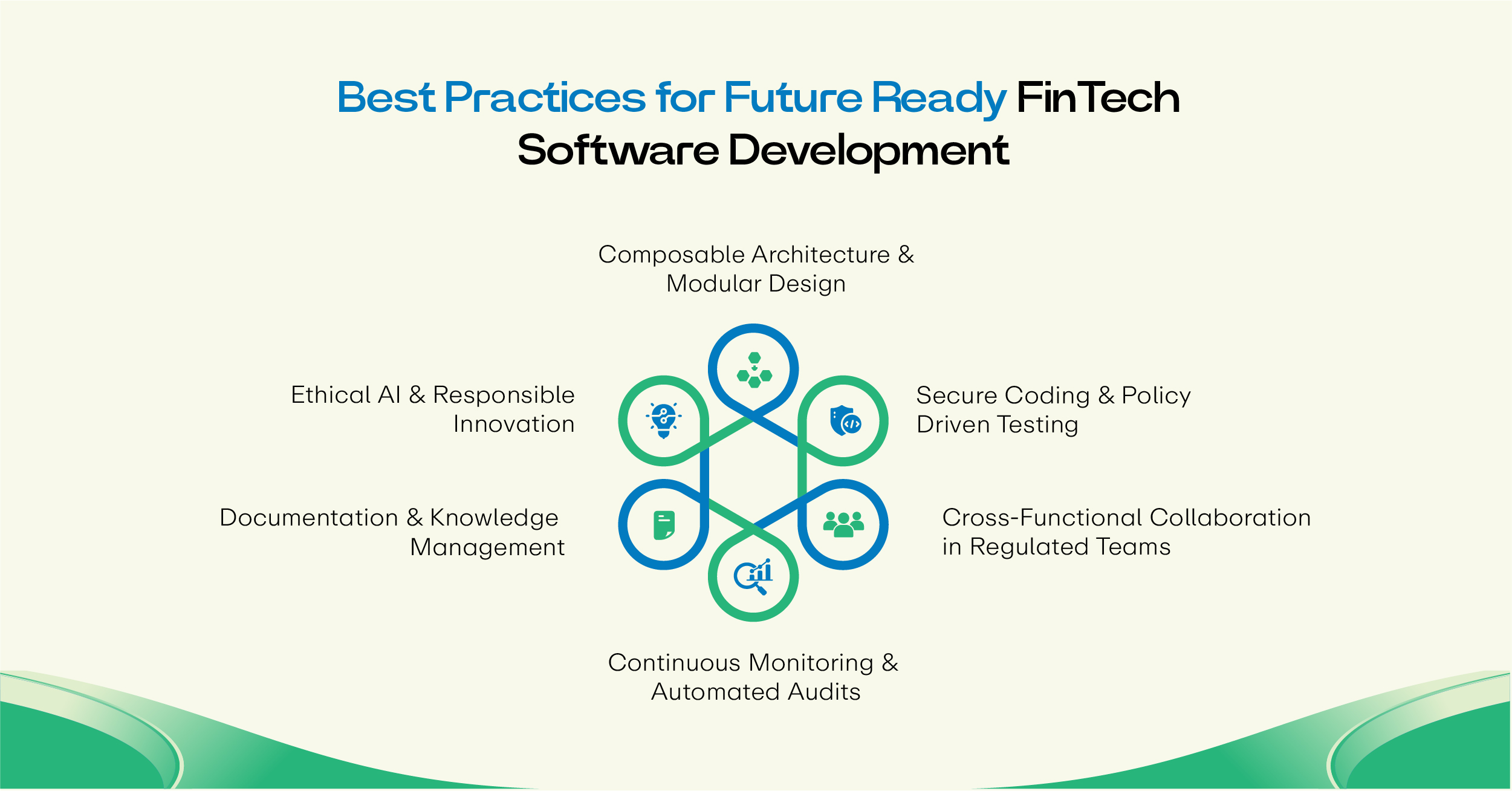
Creating long-lasting fintech starts by planning around shifts right away. The fintech trends 2025 show that top players build systems that are flexible, safe, and yet ready to evolve—never locked into fixed ideals.
Composable Architecture and Modular Design
Construct using pieces, not one big chunk. Change parts without redoing the whole thing. FinTech personalization grows smoothly when every function, such as payments, ID checks, and scam detection, works independently yet integrates easily.
Secure Coding and Policy-Driven Testing
It’s not something you do at the end; it lives in each change. Fintech software security best practices for 2025 need automated checks for flaws, rules set directly in code, and live attack simulations baked into build flows.
Cross-Functional Collaboration in Regulated Teams
Teamwork between engineers, compliance staff, and production leads—when they don’t align, they fall apart. With FinTech, maintaining compliance requires constant communication, the same tools across departments, and an understanding that rules define system design far beyond documents alone.
Continuous Monitoring and Automated Audits
Run software that checks its own work. Because fintech compliance syncs live, you get instant alerts whenever something changes, alongside nonstop logging. Remaining compliant will not be as urgent as panicking, but it is worth investing in monitoring a dashboard.
Documentation and Knowledge Management
Code missing explanations piles up trouble down the line. When it comes to financial data orchestration, clarity matters; solid API guides, notes on key design choices, or step-by-step operation manuals make a real difference. It becomes easier for the successor to manage the process.
Ethical AI and Responsible Innovation
Ethical AI in FinTech? Clear loan approvals you can actually understand, checking algorithms for unfair patterns, because mistakes happen, or designing safety into data handling right away. Create tools people rely on by keeping artificial intelligence open, balanced, and even responsible straight out of the gate.
Tuvoc’s Technology Stack for 2026 Readiness
Fintech Trends 2025 have been assimilated into our development process. Leveraging emerging technology and adopting best practices to innovate and meet regulatory compliance rapidly are ingrained in us. The best fintech software development trends in 2025 are all visible in our futuristic fintech solutions software development services.
Cloud-Native Kubernetes
Container management enables systems to scale up ad hoc when necessary, support gradual updates without service interruptions, roll back changes when needed, scale resources within seconds, and require no hands-on maintenance.
Event-Driven Architecture
Apache Kafka supports simultaneous data processing, enabling immediate access to live data and enabling the detection of scams in seconds, whilst tasks can operate independently of delays.
Microservices with API Gateway
Modular services communicate via protected hubs—this prevents problems from spreading, enables separate rollouts, and lets teams push updates without waiting on lengthy launch schedules.
AI/ML Pipeline Infrastructure
TensorFlow or PyTorch setups keep learning from new inputs and rolling out live once performance improves, while split tests check each version before launch.
Blockchain Integration Layer
Smart contracts link DeFi systems to traditional banking networks. So digital assets can move fast, trades can clear right away, and every action is recorded openly and permanently on the blockchain.
Zero-Trust Security Framework
Behavioral patterns keep checking your actions nonstop; encryption guards information whether it’s at rest or in motion. APIs slow down traffic when needed—innovative systems scan each deal for weird stuff without you doing a thing.
FAQs
Partner with fintech infrastructure providers offering modular APIs for payments, lending, and insurance that embed directly into your product experience.
Independent microservices for payments, accounts, lending, and fraud detection that connect through APIs, enabling rapid reconfiguration without rebuilding core systems.
Shifting from manual compliance to automation is deemed as a policy in code. 24/7 watch, continuous audit, and headcount tracking without inflating costs are changing the face of the industry.
The trends relate to assistance through AI-based customization, embedded fintech APIs, integration with DeFi, open financial ecosystems, behavior-based biometrics, and microservices, which may be scaled on clouds and allow for quickly introducing innovations.
Make credit decisions in 3 seconds, plan individualized investments, detect fraud instantly, and interact with customers when they need it. AI in fintech acts in favor of customers before their needs arise.

Bhavin Umaraniya
Bhavin Umaraniya is the CTO at Tuvoc Technologies, with 18+ years of experience in frontend and web software development. He leads tech strategy and engineering teams to build scalable and optimized solutions for start-ups and enterprises.

Have an Idea? Let’s Shape It!
Kickstart your tech journey with a personalized development guide tailored to your goals.
Discover Your Tech Path →Share with your community!
Latest Articles

Retail Media Audience Extension | Exporting Off-Site Signals
Executive Takeaways The Saturation Point:On-site inventory is mathematically finite; decoupling signal from surface is mandatory. The Arbitrage Opportunity:Retailer data creates…

Building a Retail Media Network | Sponsored Products & Vendor Portals
EXCLUSIVE TAKEAWAYS Retail is Low Margin, Ads are High: RMNs exist solely to subsidize 5% retail margins with 90% media…
Automating AdOps | Custom Scripts for Bid Optimization and Workflow
What AdTech Ops Really Looks Like Before Automation The programmatic industry hides a dirty secret: auctions happen in milliseconds, but…